India’s rise as a major global power in the coming decades will depend significantly on how effectively it responds to this historic challenge. — Dr. Dhanpat Ram Agarwal
The contemporary global order is passing through one of its most fragile geo-political phases since the end of the Cold War. The convergence of the Iran–Israel confrontation, the renewed tensions involving the United States in West Asia, the strategic contest over the Strait of Hormuz, and the evolving architecture of the Abraham Accords has transformed energy security from a purely commercial issue into a matter of national survival and geopolitical influence. The crisis has exposed the vulnerabilities of import-dependent economies like India and has simultaneously accelerated the transition toward a new global strategic and financial order.
The Abraham Accords, initiated in 2020 under American diplomatic sponsorship, normalized relations between Israel and several Arab states including the United Arab Emirates, Bahrain, Morocco, and Sudan. While the accords were projected as a peace and economic integration initiative, they also created a new strategic alignment in West Asia directed largely toward containing Iran’s regional influence. Over time, this emerging bloc reshaped the geopolitical balance of the Gulf region. Iran increasingly viewed the growing military, intelligence, and technological cooperation between Israel and Gulf monarchies as a direct strategic encirclement.
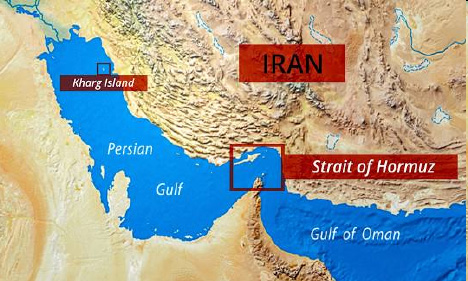
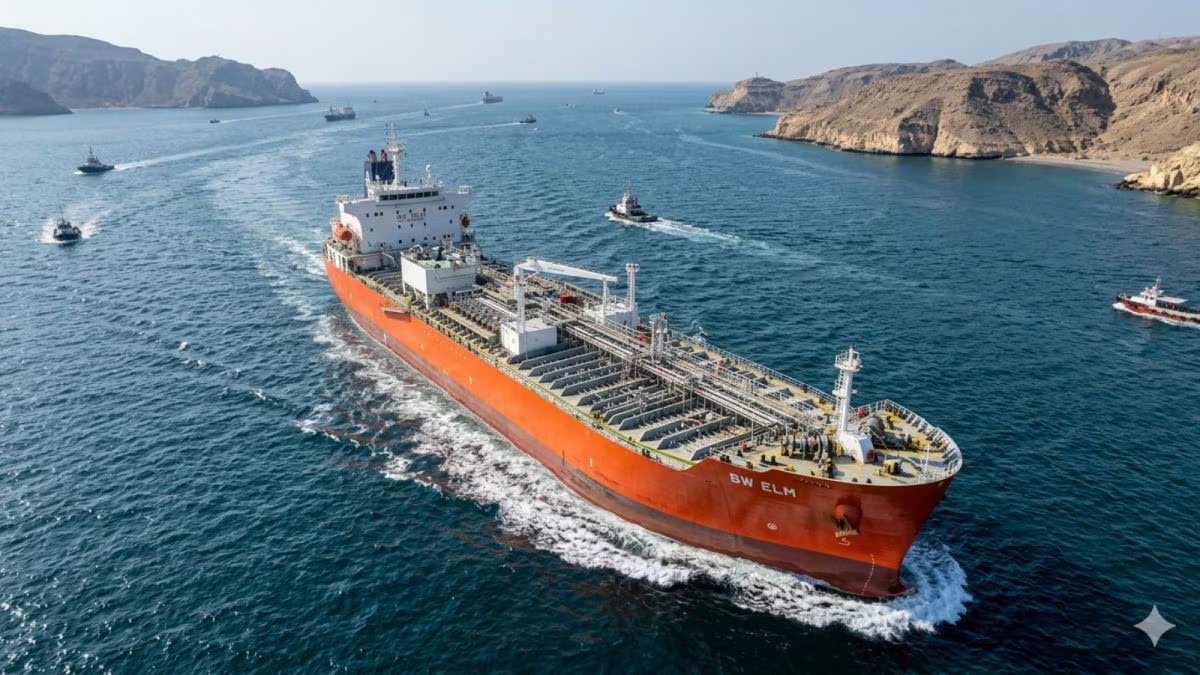
The situation became even more volatile after the escalation of Iran–Israel hostilities and the broader regional polarization involving American military deployments in the Gulf. The Strait of Hormuz — through which nearly one-fifth of global oil supplies and a substantial volume of LNG trade passes — once again emerged as the world’s most sensitive maritime chokepoint.
The importance of the Strait of Hormuz cannot be overstated. Nearly 20–25 percent of global crude oil trade and a significant proportion of liquefied natural gas exports move through this narrow maritime corridor connecting the Persian Gulf to the Arabian Sea. Any military disruption, blockade, or insurance risk in this region immediately causes global oil prices to surge, shipping costs to rise sharply, and financial markets to become unstable. The present crisis demonstrated how quickly energy supply chains can become instruments of geopolitical warfare.
For India, the implications are profound. India is today one of the fastest-growing major economies in the world, but its energy architecture remains heavily dependent on imports. India imports nearly 85 percent of its crude oil requirement, while a large share of its LPG, LNG, fertilizer feedstock, and petrochemical inputs are linked directly or indirectly to Gulf energy supplies.
Any prolonged disruption in the Gulf region therefore creates a cascading economic effect on India:
- Rising crude oil prices increase India’s import bill.
- The current account deficit widens.
- Pressure on the rupee intensifies.
- Inflation rises across transport, agriculture, and manufacturing sectors.
- Fertilizer costs increase, affecting food security.
- Fiscal pressures emerge due to fuel subsidies and welfare commitments.
The crisis also highlighted India’s vulnerability in LPG and LNG supplies. In periods of supply uncertainty, domestic cooking gas prices rise sharply, transport costs increase, and industries dependent on gas-based energy face production disruptions. Small industries, ceramic units, transport operators, hotels, and restaurants become especially vulnerable.
The fertilizer sector presents another strategic concern. India’s agriculture remains substantially dependent on imported phosphates, potash, and gas-linked fertilizer inputs from the Gulf and West Asia. A prolonged energy disruption can therefore evolve into an agricultural crisis, increasing food inflation and rural distress.
One of the most significant lessons from the Hormuz crisis is the importance of strategic petroleum reserves (SPR). China possesses energy reserves sufficient for several months, whereas India’s strategic reserves remain relatively limited in comparison. The crisis demonstrated that energy reserves are no less important than military reserves in the modern geopolitical environment.
The weakening of the rupee during periods of oil shocks also reveals the structural linkage between energy security and monetary stability. Higher dollar payments for crude imports place pressure on foreign exchange reserves and increase imported inflation. In an era of rising geopolitical fragmentation, energy-importing nations face not only commodity risk but also currency risk.
Another important strategic dimension is India’s balancing diplomacy. India today maintains close strategic relations with the United States and Israel in areas such as defense, technology, intelligence cooperation, and Indo-Pacific security. At the same time, India depends heavily on Gulf countries for energy imports and on Iran for regional connectivity projects such as the Chabahar Port and the International North-South Transport Corridor (INSTC).
This requires India to pursue a sophisticated policy of multi-alignment rather than traditional non-alignment. India must simultaneously maintain:
- Strategic cooperation with the United States.
- Defense and technological engagement with Israel.
- Energy partnerships with Saudi Arabia and the UAE.
- Connectivity and regional access cooperation with Iran.
- Continued engagement with Russia for discounted energy supplies.
The Abraham Accords have also created a new diplomatic opportunity for India. India enjoys strong relations with Israel as well as with Arab Gulf states. The emergence of the India–Middle East–Europe Economic Corridor (IMEC), supported by the United States, UAE, Saudi Arabia, and Europe, could potentially become a transformative strategic trade architecture connecting India to Europe through West Asia. However, the success of such corridors depends entirely upon regional stability.
Simultaneously, China has attempted to deepen its own strategic footprint in West Asia through the Belt and Road Initiative, long-term energy contracts with Iran, and infrastructure investments across the Gulf. Thus, the Hormuz crisis is not merely a regional conflict — it is also part of the larger contest for control over future global trade routes, energy systems, and financial influence.
India must therefore draw long-term strategic lessons from the current geopolitical disorder.
Key Strategic Priorities for India
1. Expansion of Strategic Petroleum Reserves
India should increase its strategic petroleum storage capacity from a few weeks to at least 90 days of emergency reserves, similar to major advanced economies.
2. Diversification of Energy Sources
India must reduce excessive dependence on the Gulf by expanding energy partnerships with:
- Russia
- Central Asia
- Africa
- Latin America
- United States
3. Acceleration of Renewable and Nuclear Energy
The crisis underlines the importance of:
- Solar energy
- Green hydrogen
- Wind energy
- Small Modular Reactors (SMRs)
- Thorium-based nuclear technologies
Energy self-reliance must become central to the vision of Viksit Bharat 2047.
4. Strengthening Domestic Gas and Fertilizer Capacity
India should increase domestic production of gas, fertilizers, and petrochemicals while also developing alternative indigenous agricultural inputs.
5. Maritime and Naval Security
The Indian Navy’s role in safeguarding sea lanes in the Arabian Sea and Indian Ocean has become strategically critical. Energy security is now inseparable from maritime security.
6. Strategic Connectivity Corridors
Projects like:
- Chabahar Port
- INSTC
- IMEC
Must be treated not merely as commercial projects but as instruments of geopolitical resilience.
7. Protection of Indian Diaspora in the Gulf
Millions of Indians work in Gulf countries and contribute significantly through remittances. India must strengthen emergency evacuation mechanisms and diaspora security frameworks.
The broader lesson from the Hormuz crisis is unmistakable: economic growth without energy security is inherently fragile. The 21st century global order will increasingly be shaped not only by military power but also by control over energy routes, supply chains, technology, and financial systems.
For India, energy security can no longer remain a secondary economic concern. It must become a central pillar of national security, foreign policy, industrial strategy, and long-term civilizational resilience.
The Abraham Accords, the Iran–Israel confrontation, and the Hormuz crisis collectively signal the emergence of a new geopolitical era in which strategic autonomy will depend upon energy self-reliance, diversified supply chains, technological advancement, and balanced diplomacy. India’s rise as a major global power in the coming decades will depend significantly on how effectively it responds to this historic challenge.
Sources
- User’s original Hindi article: “Iran-America War and India’s Energy-Economic Security”
- The Abraham Accords Declaration – U.S. Department of Stateüÿ
- International Energy Agency (IEA) – Strait of Hormuz and Global Oil Tradeüÿ
- U.S. Energy Information Administration – World Oil Transit Chokepointsüÿ
- International Monetary Fund (IMF) – India Economic Outlooküÿ
- Reserve Bank of India – Annual Report and External Sector Dataüÿ
- Ministry of Petroleum and Natural Gas, Government of Indiaüÿ
- International Energy Agency – India Energy Outlooküÿ
- United Nations World Economic Situation and Prospects 2026üÿ
- Congressional Research Service – Iran and the Strait of Hormuzüÿ
- Al Jazeera Centre for Studies – Iran-US Confrontation Scenariosüÿ
- CNBC – India-China Competition for Russian Oil Amid Hormuz Disruptionüÿ
- Britannica – Strait of Hormuz Overviewüÿ