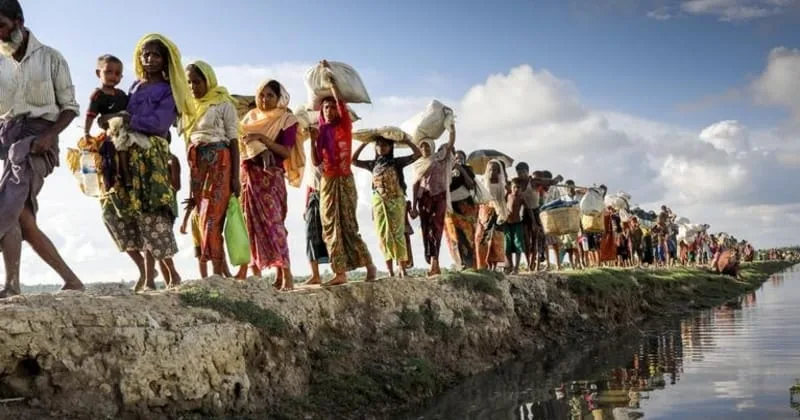
Recently, the Election Commission of India (ECI) initiated a process known as the Special Intensive Revision (SIR). Under this initiative in several states ECI made efforts, to rectify deficiencies in the electoral rolls, prior to elections. These efforts address issues such as the wrongful inclusion of foreign nationals, the failure to remove the names of deceased voters, inclusion of a single voter's name in the rolls at multiple locations, and discrepancies arising from frequent migration, in electoral rolls. Naturally, in instances where the names of foreign nationals appear in the electoral rolls, the SIR process results in their automatic deletion, as they are unable to furnish proof of their citizenship. Ultimately-following the resolution of objections-a cumulative total of 52 million voters were removed from the rolls across 12 states and 3 Union Territories. Although, the SIR process faced vehement opposition from some opposition political parties, the Supreme Court ultimately upheld its constitutional validity, thereby dismissing the objections raised by the opposition. While the process of removing the names of a large number of foreign infiltrators from the voter lists has been accomplished through the SIR, the crucial task of expelling these foreign infiltrators from the country still remains. For a considerable period, the threat of illegal Bangladeshi infiltration has been steadily escalating across various parts of India. Nowhere in the world is illegal foreign infiltration permitted; yet, regrettably, in India, persistent attempts have been made to politicize this issue.
Recently, India's Home Minister, Amit Shah, constituted a high-level committee to address the issue of illegal infiltration and the resulting demographic shifts. The perceived backdrop to this move is the fact that the problem of Bangladeshi infiltration has assumed alarming proportions in West Bengal-a situation attributed to the state's shared border with Bangladesh and the patronage extended to Bangladeshi infiltrators by the government previously led by former Chief Minister Ms. Mamata Banerjee. Given that this committee was constituted shortly after the Bharatiya Janata Party (BJP) assumed power in West Bengal, it is now evident that the government is poised to adopt a tough stance against illegal Bangladeshi infiltration. It must be understood that the issue of foreign infiltration has multiple facets. This subject is not merely about demographic shifts; it possesses several far-reaching dimensions that require careful examination. The nation is currently grappling with the economic, social, political, and law-and-order implications stemming from the illegal infiltration of Bangladeshis. However, the impact is not uniform across the entire country; the consequences of this illegal infiltration are far more pronounced in border regions and densely populated urban centers-such as Assam, West Bengal, Delhi, and Mumbai. Regarding the economic repercussions of infiltration, the primary impact is a direct assault on the employment opportunities available to Indian citizens. India is already a nation characterized by a massive population and a large youth demographic. The country's own citizens-particularly the youth-are already facing difficulties in securing employment; in this context, when Bangladeshi infiltrators, in their quest for work, are willing to accept wages significantly lower than market rates, Indian laborers are effectively displaced from the workforce. Whether in the domestic sector or in industrial employment, Bangladeshi infiltrators are systematically edging Indian citizens out of their jobs. Furthermore, a significant volume of employment in India is generated within the unorganized sector-encompassing small shopkeepers, street vendors, hawkers, scrap dealers, construction workers, and laborers in markets and wholesale hubs. In all these spheres, Bangladeshi infiltrators are seizing control of employment opportunities; in many instances, they operate by forming organized syndicates. This trend is inflicting severe financial losses upon street vendors, small shopkeepers and local traders. Moreover, since Bangladeshi infiltrators predominantly work within the unorganized sector, the government derives no tax revenue from their economic activities. Additionally, after earning money in India, they illegally remit these funds back to Bangladesh, thereby causing financial detriment to the Indian economy. Furthermore, these infiltrators are exploiting the welfare schemes run by the Government of India for the country's impoverished citizens-which provide facilities such as free rations, electricity, water, and financial inclusion services (such as bank accounts)-based on fraudulent documents. This misuse is causing an annual loss of crores to the national exchequer. Moreover, the pressure on public services in areas prone to infiltration is steadily mounting. These infiltrators have even illegally procured documents such as Aadhaar cards and ration cards. Cases involving fake Aadhaar cards, ration cards, and voter ID cards are creating significant difficulties for governance, administration, and internal security. This makes it even more challenging to distinguish between citizens and non-citizens.
Demographic shifts resulting from infiltration lead to cultural or linguistic imbalances-a phenomenon particularly evident in border districts. Competition for resources, such as land, employment, and welfare schemes, often sparks conflicts between the local population and migrant communities. Furthermore, the risk of riots is significantly higher in areas affected by infiltration. Crimes such as human trafficking, organized crime, and the illegal encroachment of public land are also frequently associated with infiltration. Allegations are frequently leveled that certain political parties either encourage illegal infiltration or turn a blind eye to it for the sake of electoral gain. This exacerbates polarization within the political discourse and poses significant challenges for the administration. One also observes the unnecessary appeasement of minorities by certain political parties-specifically those that subscribe to the politics of cultivating 'vote banks' among particular religious groups. This leads to an erosion of sound political values. On numerous occasions, election results themselves get influenced by illegal infiltrators, thereby dealing a blow to the integrity of a healthy democratic system. It is evident that if the efforts currently being undertaken by the government to resolve the problem of infiltration come to fruition, they will go a long way in mitigating the crisis currently threatening the nation's socio-economic and political fabric.