We must strive for a balanced vision of progress, one that embraces both individual aspirations and the enduring importance of family life. The choices made today will shape the character of future generations. — Mahadevayya Karadalli
Every civilization rest upon certain enduring institutions that sustain its continuity across generations. Among these, the family occupies a unique and indispensable place. Within the family that values are transmitted, traditions are preserved, responsibilities are learned, and emotional security is nurtured. Further, Dharma begins at home; society merely reflects what families practice. So, family has not only the unique culture but also the sacred bridge connecting ancestors, the living, and future generations. The family is not merely a social arrangement but also place for the child where it inherits values and samskaras.
The Family is the Foundation of Civilized Society
In the Bharatiya civilizational tradition, marriage has never been viewed as a purely personal contract between two individuals. It has been regarded as a sacred union that contributes to the welfare of the two family, society, and future generations. Since in the family resides Dharma, in Dharma resides the nation. The Sanatana system of marriage serves as the foundation upon which stable homes, responsible citizenship, and cultural continuity are built.
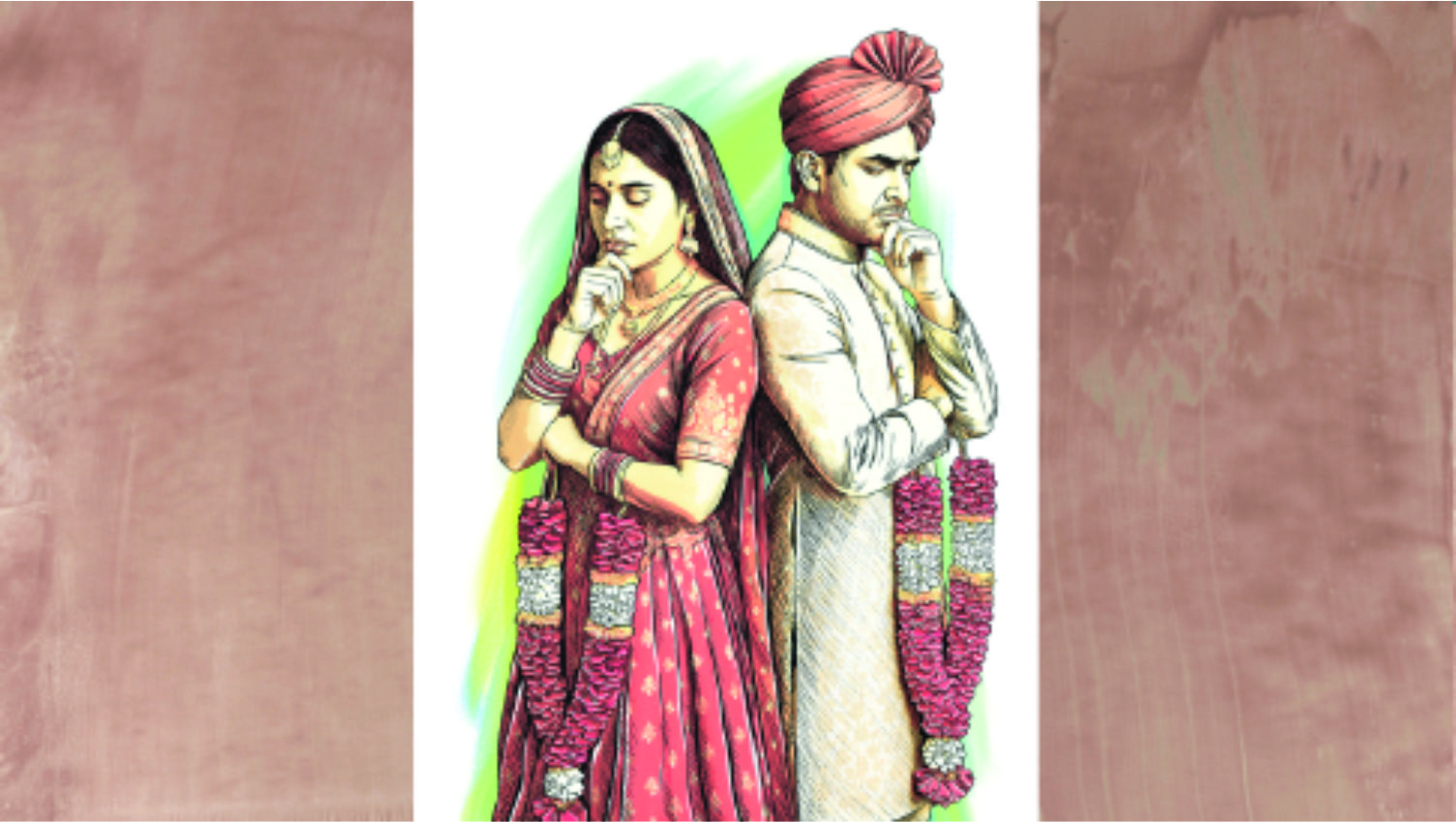
However, in recent decades, significant social transformations have altered attitudes towards marriage and family life. Increasingly, young men and women are postponing marriage, while some are choosing to remain unmarried altogether.
Understanding the Causes of Delayed Marriages
The phenomenon of delayed marriage cannot be explained by a single factor. It is the result of multiple social, economic, educational, and cultural changes.
One of the most prominent reasons is the pursuit of higher education and professional careers. Young people today spend a considerable portion of their young age in acquiring academic qualifications and establishing themselves in competitive professions. Hence, Career development often takes precedence over family formation.
Economic independence has also transformed traditional perspectives. Many young women and men are financially self-reliant and prefer to postpone marriage until they achieve personal goals and financial stability. While economic empowerment is undoubtedly a positive development, it sometimes leads individuals to perceive marriage as an optional rather than essential stage of life.
Urbanization and modern lifestyles have further contributed to this shift. The growing emphasis on individual freedom, personal aspirations, and self-fulfilment often encourages young adults to delay long-term commitments. In many cases, marriage, parenthood, and family responsibilities are viewed as constraints upon personal growth rather than complementary aspects of a meaningful life.
Additionally, Children since childhood for one or other reason are out of lovely home environment. As a result of which the weakening of intergenerational bonds has reduced opportunities for younger generations to appreciate the joys and significance of family life. Absence of Coparcenary family system, the Traditional family gatherings, festivals, community interactions, and shared cultural experiences that once nurtured a positive view of marriage are gradually diminishing in many urban settings.
Consequences for Society
While individuals possess the freedom to make personal life choices, large-scale social trends inevitably influence the collective future of society.
One concern frequently raised by demographers is the declining birth rate in many countries. When marriages occur later and family size decreases, population growth slows significantly. Beyond demographics, delayed marriages may also contribute to emotional and social challenges. Loneliness, social isolation, and weakened family networks are becoming increasingly common in many parts of the world. Elderly parents often find themselves without adequate family support, while younger generations may lack the close-knit familial relationships that traditionally provided emotional stability.
The rise in single-person households, declining birth rates, and shrinking family structures can gradually weaken community bonds. Villages lose population, neighbourhood relationships diminish, and society becomes increasingly individualistic. Material prosperity alone cannot compensate for the loss of human relationships and social connectedness.
The Importance of Timely Marriage
The concept of “timely marriage” should not be understood as coercion or the denial of educational and professional opportunities. Rather, it emphasizes the importance of balancing personal aspirations with family responsibilities. Awareness about Bharatiya G[hasthâúrama is need of the hour. Our Puranas often warned that those who doesn’t have children will not achieve Mukti. Grasthashrama is the pillar upon which all other stages of life rest. Where there is family, there are values; where there are values, there is prosperity. The Bharatiya family is not a contract of convenience but a covenant of duty, affection, and continuity. Family life is the sacred field where the seeds of Dharma blossom into civilization. The strength of Bharat does not begin in palaces or parliaments; it begins in families
Marriage and career need not be viewed as competing objectives. With mutual understanding and family support, both partners can continue their education and professional development after marriage. Throughout history, countless individuals have successfully pursued academic excellence, professional achievement, and family life simultaneously. Parents, too, play a vital role in shaping positive attitudes towards marriage. Instead of treating marriage as a burden or merely a social obligation, families should present it as pious obligation of couples and also an opportunity for companionship, shared growth, and meaningful contribution to society.
Young people should be encouraged to understand that Marriage and family life are not restrictions on freedom; they are opportunities to cultivate responsibility, compassion, and selflessness.” Further youth has to understand wealth, status, and professional success, though valuable, are ultimately means to enrich life rather than ends in themselves. Human relationships, family bonds, and the joy of nurturing future generations remain among life’s most profound sources of fulfilment.
Rebuilding a Family-Centred Culture
Addressing the challenge of delayed marriages requires collective effort. Families, educators, community organizations, and cultural institutions all have important roles to play.
First, families should create warm and harmonious environments where younger generations can experience the benefits of strong family relationships. Youth has to understand that Marriage and family life are not restrictions on freedom; they are opportunities to cultivate responsibility, compassion, and selflessness. Thorugh celebration of Festivals, family gatherings, and community interactions help cultivate a sense of belonging and appreciation for family life.
Second, educational institutions and community organizations should promote balanced perspectives that recognize both individual achievement and social responsibility. Young people should be encouraged to view marriage and family not as obstacles to progress but as integral dimensions of a complete and meaningful life.
Most importantly, society must support young couples by reducing practical barriers to marriage and parenthood. Affordable housing, employment opportunities, childcare support, and flexible work arrangements can make family life more attainable and sustainable.
A Call for Correction
The future of any civilization depends not only upon economic growth, technological advancement, or political power but also upon the strength of its families. A society that neglects family life risks losing the very foundation upon which its culture, values, and continuity rest.
The challenge before us is to restore respect for the institution of family as a cornerstone of human flourishing. Education, career success, and personal freedom are valuable achievements; yet they attain their fullest meaning when harmonized with relationships, responsibility, and generational continuity.
We must strive for a balanced vision of progress, one that embraces both individual aspirations and the enduring importance of family life. The choices made today will shape the character of future generations. Therefore, thoughtful & responsible action, and renewed commitment to family values are essential for preserving social stability, cultural continuity, and the well-being of humanity itself. With joint efforts of all stake holders. Individually and Collectively shall try to address this Social Challenge of Our Times i.e. the Mindset of Postponing Marriage among the Younger Generation to maintain Continuity of Family system and its Stability.
Mahadevayya Karadalli, Giridham, Rastrakuta Road, Om Nagar, University Road, Kalaburagi 585 105