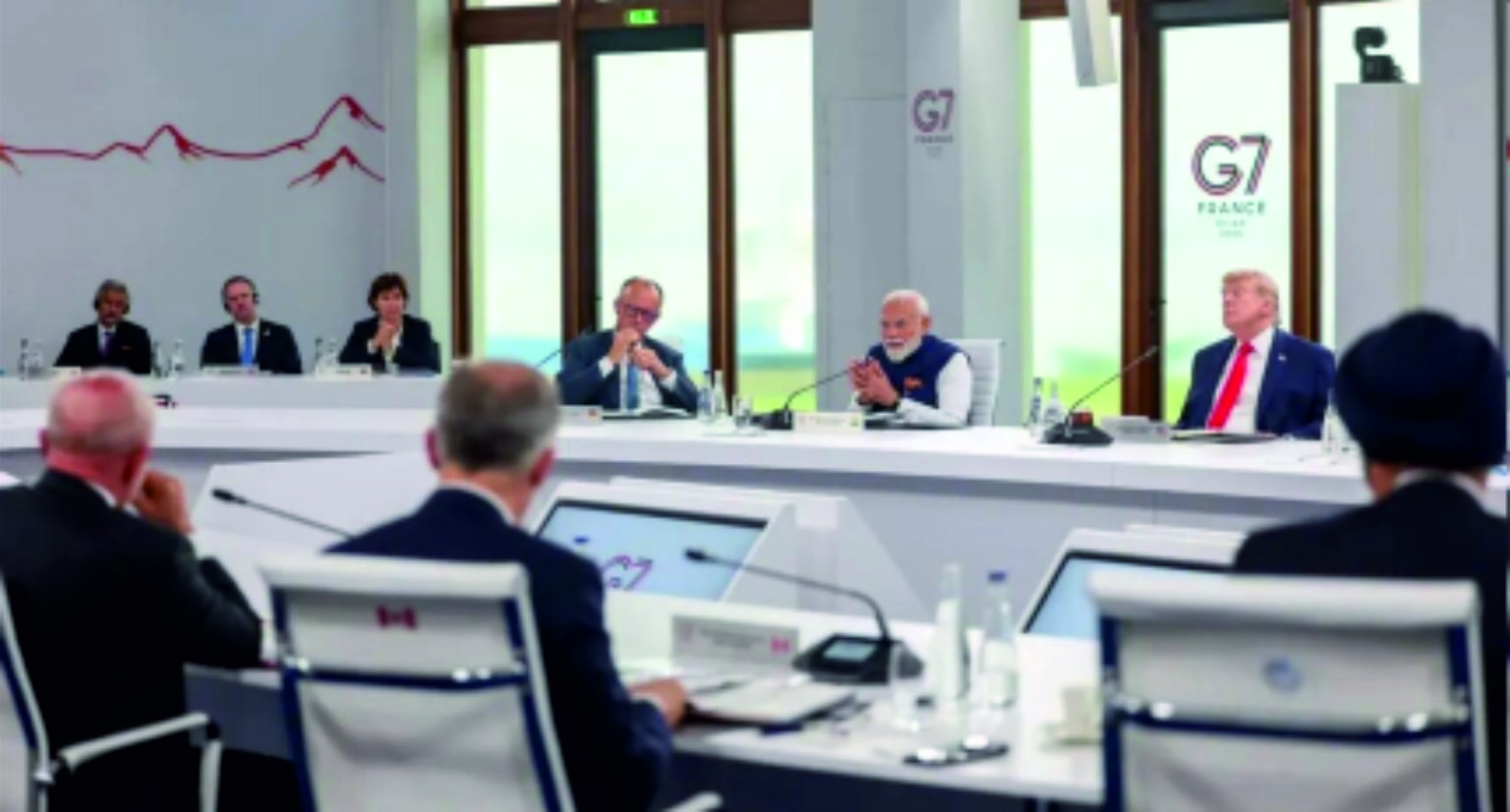
India’s enhanced stature during present regime, at the global level reflects a more assertive and confident national presence. — Dr. Ashwani Mahajan
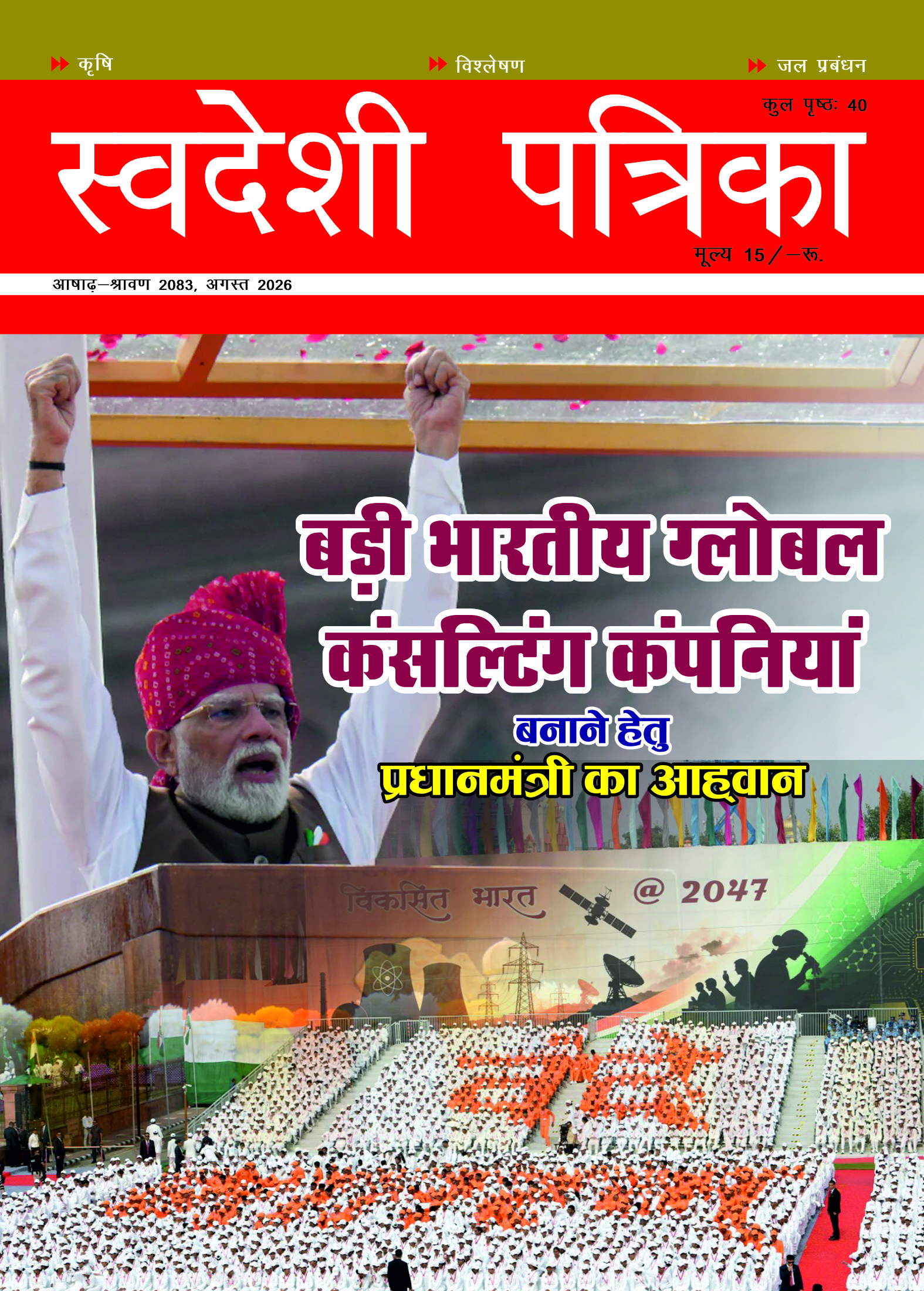
On May 26, 2014, Narendra Modi took the oath as Prime Minister, leading the first non-Congress government, after Bharatiya Janata Party secured an absolute majority. Since independence, India has experienced varying degrees of economic growth, although the growth rates in several smaller nations with similar initial conditions were significantly higher. Consequently, while India's economic growth rate hovered between 3 and 4 percent during the first three decades post-independence, small nations in West Asia—and elsewhere—recorded much faster economic growth alongside technological advancement. While India was categorized as a developing nation, these smaller countries were gaining renown as "Asian Tigers."
Even rate of poverty reduction was not very impressive. Though, there were earlier efforts to assess poverty in India, the very first assessment of poverty, based on a specific framework was conducted only in 1973–74; when the Planning Commission introduced the concept of the poverty line, according to which, 54.9 percent of the population was estimated to be living below it. Although the definitions of the poverty line evolved over time, as recently as 2012–13, 21.9 percent of the population—amounting to 269.3 million (26.93 crore) people—was still considered to be below the poverty line. Meanwhile, according to the World Bank's definition—which classified those earning less than $1.25 per day in 2012–13 as living under acute—one-third of the world's 1.2 billion poor people, or 400 million, were in India.
However, by the year 2025, the proportion of the total population living in extreme poverty—based on the World Bank’s definition, which was upgraded to US$2.15 per day—has fallen to just 2.3 percent; even under the more updated definition of US$3 per day, the figure is estimated at merely 5.3 percent. This can certainly be considered a major achievement. Yet, today, both in India and globally, there exists a definition of poverty that extends beyond this extreme form, that is, "multidimensional poverty." Measuring this involves ten indicators: two related to education, two to health, and the remaining six covering housing, electricity, sanitation, clean cooking fuel, drinking water, and asset ownership. According to the United Nations Development Programme (UNDP), the Multidimensional Poverty Index dropped from 0.117 to 0.069 in just five years, between 2015–16 and 2019–21. NITI Aayog reports that multidimensional poverty declined from 29.17% in 2013–14 to an estimated 11.28% in 2022–23, marking a reduction of approximately 18 percentage points over the decade.
In other words, it can be said that India has witnessed a significant reduction not only in extreme poverty but also in multidimensional poverty. Generally, many economic experts argue that if the focus shifts to redistribution, as part of poverty-reduction efforts during a period of economic growth, the rate of growth itself might slow down. Therefore, they contend that prioritizing redistribution during phases of economic growth is not advisable. Economists who hold this view—and who are also proponents of free trade and free markets—include not only experts from the World Bank and the International Monetary Fund but also tall figured like Prof. Jagdish Bhagwati and his co-author Prof. Arvind Panagariya are in the same league.
Refuting the arguments of such economists, the government led by Prime Minister Narendra Modi has not only prevented a decline in India's economic growth rate but has also achieved significant success in alleviating both multidimensional and extreme poverty. Despite massive efforts to reduce poverty at a much faster pace than before—and notwithstanding the setback of a year due to COVID-19—India's real GDP continued to grow at an average annual rate of approximately 7.5 percent during Narendra Modi's tenure.
It is essential to analyze the efforts made by this government to understand and resolve this puzzle. We also need to identify which policies proved effective in reducing inequality and poverty in the country. It’s important to understand that while in the earlier years, the pace of poverty reduction was much slower, how Narendra Modi’s regime could make significant strides in poverty reduction, making growth to be much inclusive than before.
Financial Inclusion
Despite numerous development efforts undertaken between independence and 2014, the country did not witness significant progress in financial inclusion. This is evidenced by the fact that 580 million (58 crore) Jan Dhan accounts were opened between 2014 and 2026. Jan Dhan accounts are zero-balance accounts, meaning no initial deposit is required to open them. It is heartening to note that by June 2026, deposits totaling ?3 lakh crore had accumulated in these Jan Dhan accounts initiated for the poor.
Another dimension of financial inclusion is Direct Benefit Transfer (DBT). Previously, a substantial portion of the funds allocated by the government for welfare schemes failed to reach the intended beneficiaries due to corruption. However, following the opening of Jan Dhan accounts, these were linked with Aadhaar (UID) and mobile phone numbers; consequently, the entire welfare allocation is now transferred directly into the beneficiary's account, eliminating any possibility of leakage. This process is known as the 'JAM Trinity'—comprising Jan Dhan accounts, Aadhaar, and mobile connectivity—an achievement India has realized through its own technological prowess.
Darling of Women: Housing, Sanitation, Clean Fuel, Electricity, and Water
A particularly stark reality of the journey from independence until 2014 was that, even in 2014, 123 million people in the country lived in *kutcha* (makeshift/temporary) houses, while 317 million lived in semi-permanent structures. In contrast, over just the last 12 years, 30 million houses have been built in rural areas and 10 million in urban areas, and another 12 million approved/ under construction.
The compulsion to practice open defecation was long considered a major stigma for the nation. It is a matter of satisfaction that since 2014, 128 million toilets have been constructed across the country, effectively resolving the issue of open defecation. Today, the country has achieved near-total electrification, and access to drinking water has reached most regions under the 'Har Ghar Nal Se Jal' (Tap Water in Every Home) scheme. Regarding clean fuel, while there were only 130 million LPG connections in 2014, the figure has now risen to over 340 million; notably, 100 million of these new connections were provided under the 'Ujjwala Yojana,' which supplied free cylinders and gas stoves to women from impoverished backgrounds. Housing, water, electricity, sanitation facilities, and LPG connections represent achievements that have benefited society at large, and the poor in particular. However, women have experienced the greatest empowerment, as access to toilets, water, and LPG connections has brought about a transformative change in the lives of women from underprivileged families.
Not just social infrastructure, which Narendra Modi government has built in the last 12 years, it also has focused on social reforms through legislations, which have changed the lives of the women and that too Muslim women.
For Muslim women in the age group ranging from 15 years to 80 years and even above, were living under the threat that any time, their husbands could speak, three words Talaq-Talaq-Talaq, and their lives would be ruined as they will not be able to stay even for a minute in their home. With a single legislation, declaring this act as criminal, Muslim women have been free from this threat forever.
In the process, delay in women’s reservation has hurt perceptions of women. Higher women turnout in West Bengal signalled dissatisfaction, contributing to electoral setbacks for Mamta Banerjee’s TNC.
Along-with GDP growth, Narendra Modi’s achievements are clearly visible across multiple sectors. Expansion of road, rail, air and water transport infrastructure, digital payments, significant advancements in space technology, and push towards self-reliance in defence production; these developments have been substantial. India’s enhanced stature during present regime, at the global level reflects a more assertive and confident national presence.
Mindset of the people towards the government, has been positively impacted by these factors. Perhaps, this is the reason that surveys consistently show that the popularity of both the government and the Prime Minister has remained largely undented over the years.
Opposition should also take an important lesson for the opposition. Instead of engaging in unconstructive criticism or opposing the government on frivolous issues, there is a need to present a well-thought-out and credible roadmap. Such a roadmap should address the key socio-economic challenges facing the country and offer meaningful alternatives for further progress.